

Medjool Dates Supplier Malaysia: Grades, Prices and Cold Storage
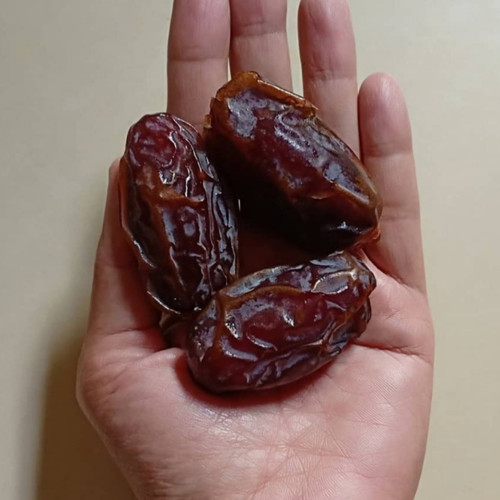
Medjool is a large, very soft date with a rich caramel taste, and among the in-stock packs on the price list used in this guide it was the dearest date per kilo. If you typed “Medjool dates supplier Malaysia” into a search bar hoping to find a grower, there is no farm to visit. Malaysia has no commercial date-growing trade, so every Medjool on sale here was imported. What you can check is the grade, the pack, the price per kilo and how the fruit is kept before it reaches you.
This guide uses the Medjool listings on one Malaysian wholesaler’s list, checked in November 2026, together with what the FAO’s date palm handbook says about how Medjool is sized, packed and stored.

Where Medjool comes from
Medjool originated in Morocco. The FAO handbook places it in the Tafilalet area, where it was the principal export date from the 17th century and was sold in a fancy gift box for Christmas in Paris, Madrid and London. It was later taken to the USA in 1927 and to Israel in 1934. The same chapter notes that all the Medjool palms in the world originated from one palm in Bou Denib, Morocco.
When the FAO’s 2002 handbook was written, Medjool production was under 5,000 tons a year and mostly came from the Coachella Valley and Bard in California, Morocco and Israel. That figure is from that time, not today.
On the list I checked, every Medjool listing carries “Palestine” or “Palestin” in its name. Ask any supplier to show you the country of origin on the pack itself. The FAO handbook says that in most importing countries the law demands that weight, country of origin, quality and date of expiry appear on the package, so it is fair to expect those details on every pack you buy.
What Jumbo, Large and Super Jumbo actually mean
Grade names on Medjool packs are size names. They are not an international standard. Each importer sorts by its own rules, so one seller’s Jumbo need not match another’s.
The FAO handbook gives one example. For Medjool in Israel, sizes are defined by the weight of the fruit: Jumbo is more than 23 g, Large is 18 g to 23 g and Medium is 15 g to 18 g. FAO adds that other countries, the USA for instance, use other definitions of size. FAO describes a two-stage method, in which fruit is first graded A to D (A perfect fruit, B skin separation, C for pitting and industrial use, D rotten or damaged) and only grade A then goes on to be sorted into jumbo, large and medium.
So when a supplier quotes you “Jumbo”, the useful follow-up is simple. Jumbo by whose measure? A seller who can tell you how they sort is easier to deal with than one who just repeats the label.
Medjool prices on one wholesaler’s list (November 2026)
The list had nine Medjool listings. Five were in stock and four were out of stock.
| Listing name | Total weight | Price | Per kg | Stock |
|---|---|---|---|---|
| Medjool Palestin Premium Jumbo 2026 [5kg] | 5kg | RM280 | RM56 | In stock |
| Medjool Palestin Jumbo 2026 – 500gr * 12pkt | 6kg | RM355 | RM59.17 | In stock |
| Medjool Palestin Jumbo 2026 – 900g * 8pkt | 7.2kg | RM448 | RM62.22 | In stock |
| Medjool Palestine Super Jumbo 2026 [5kg] | 5kg | RM315 | RM63 | In stock |
| 900g Medjool Palestin Jumbo [1box] | 900g | RM70 | RM77.78 | In stock |
| Medjool Palestine Jumbo- 12pkt * 500Grams | 6kg | RM290 | RM48.33 | Out of stock |
| Medjool Palestine Large – 8pkt * 1Kg | 8kg | RM394 | RM49.25 | Out of stock |
| Medjool Palestin Large 2026 – 5kg | 5kg | RM250 | RM50 | Out of stock |
| Medjool Palestin (Large) 2026 – 250gr * 24pkt | 6kg | RM355 | RM59.17 | Out of stock |
A few things stand out. All three Large listings were out of stock, so on that day the only in-stock Medjool was Jumbo, Premium Jumbo or Super Jumbo. Among the in-stock packs, Premium Jumbo 5kg at RM56 a kilo was the lowest per kilo and the single 900g box at RM77.78 a kilo was the highest.
Bigger is not always cheaper per kilo here. The 8 × 900g listing (7.2kg) worked out at RM62.22 a kilo, which is more than the Premium Jumbo 5kg at RM56 but a little less than the Super Jumbo 5kg at RM63. If you want small packs to resell, compare it against the single 900g box instead: eight of those boxes would cost RM560, against RM448 for the eight-packet listing, which is RM112 less. The listing names do not say whether those 900g packets are packed the same way as the boxed one, so ask before you count on that.
The two 5kg packs also differ by RM35, RM280 for Premium Jumbo against RM315 for Super Jumbo. Neither name tells you the fruit weight behind it, which brings us back to asking how the seller sorts.
For context, no in-stock pack of any other date variety on the same list cost more than RM45 a kilo. Every in-stock Medjool was RM56 a kilo or more.
Cold storage and the two Medjool defects
Medjool is a soft and delicate fruit with a thin skin, and FAO says it needs careful handling because harming the skin may cause sugar crystallisation. The handbook names two defects that are typical of Medjool. The first is loose skin, where the skin separates from the flesh as the fruit loses water. It is an aesthetic defect rather than a taste defect, and fruit with more than 20 to 25 per cent loose skin is graded Class II. The second is sugar crystallising, where sugar crystals form on the flesh and under loose skin. FAO grades that fruit Class II too.
These matter to a buyer because skin separation is costly. FAO says it is more serious in varieties such as Medjool and significantly lowers the price of export fruit.
Cold storage helps. According to FAO, the temperature commonly used today for long-term preservation of several varieties including Medjool is −18 °C (0 °F), which decreases water loss and also decreases sugar crystallisation and skin separation. Packing material counts as well: the handbook notes that cardboard is sensitive to humidity and various plastics are sensitive to low temperatures.
Medjool dates supplier Malaysia: a checklist
None of these questions needs special knowledge. They just make the supplier put the details on the table before you pay.
- What country of origin is printed on the pack, and can I see a photo of the label?
- How do you sort Jumbo, Large and Super Jumbo, by fruit weight or something else?
- Which grades and pack sizes are in stock this week, and which are only on the list?
- How is the stock kept before dispatch, and at what temperature?
- What is the expiry date on the batch you would send me?
- Can I see or taste a sample pack before a large order?
If the stock question gets a vague answer, remember the table above. Four of the nine listings were out of stock on the day I checked, and every Large listing was among them. For a wider look at buying close to the source, our piece on what a first-hand dates supplier means when every date is imported covers the trade chain. Shop owners weighing small packs against bulk can read our guide to pack sizes and restocking for retail shops, and there are more general checks in these tips before buying dates in bulk.
Medjool dates supplier Malaysia: when to order
Date demand in Malaysia peaks before and during Ramadan, and Hari Raya, weddings, kenduri and umrah gifts are other busy times. Gulf and Middle-East dates are mostly harvested from late summer to autumn, roughly August to November, and new-season stock reaches Malaysia some weeks later. FAO also describes Medjool as an early ripening variety. For a large Medjool order before the fasting month, start the conversation with your supplier early, while the grade you want is still showing as in stock.
Medjool dates supplier Malaysia: short answers
Can I buy Medjool from a Malaysian farm?
No. Malaysia has no commercial date-growing trade, so all Medjool here is imported. The variety itself originated in Morocco.
Which Medjool pack was cheapest per kilo?
Among the in-stock listings I checked in November 2026, the Premium Jumbo 5kg at RM280, which is RM56 a kilo. Three out-of-stock listings, two Large and one Jumbo, were cheaper per kilo but could not be bought that day.
Does Jumbo mean the same thing at every supplier?
No. Grades are each importer’s own size sorting. FAO gives Israel’s weight bands as one example and notes that other countries use other definitions.
How should Medjool be stored for a long time?
FAO says −18 °C is the temperature commonly used for long-term preservation of several varieties including Medjool.
Whatever a search for Medjool dates supplier Malaysia turns up, the checks stay the same: the origin on the label, the sorting behind the grade name, the real per-kilo price and how the stock is stored. More about this site is on the About Us page and the contact page.